
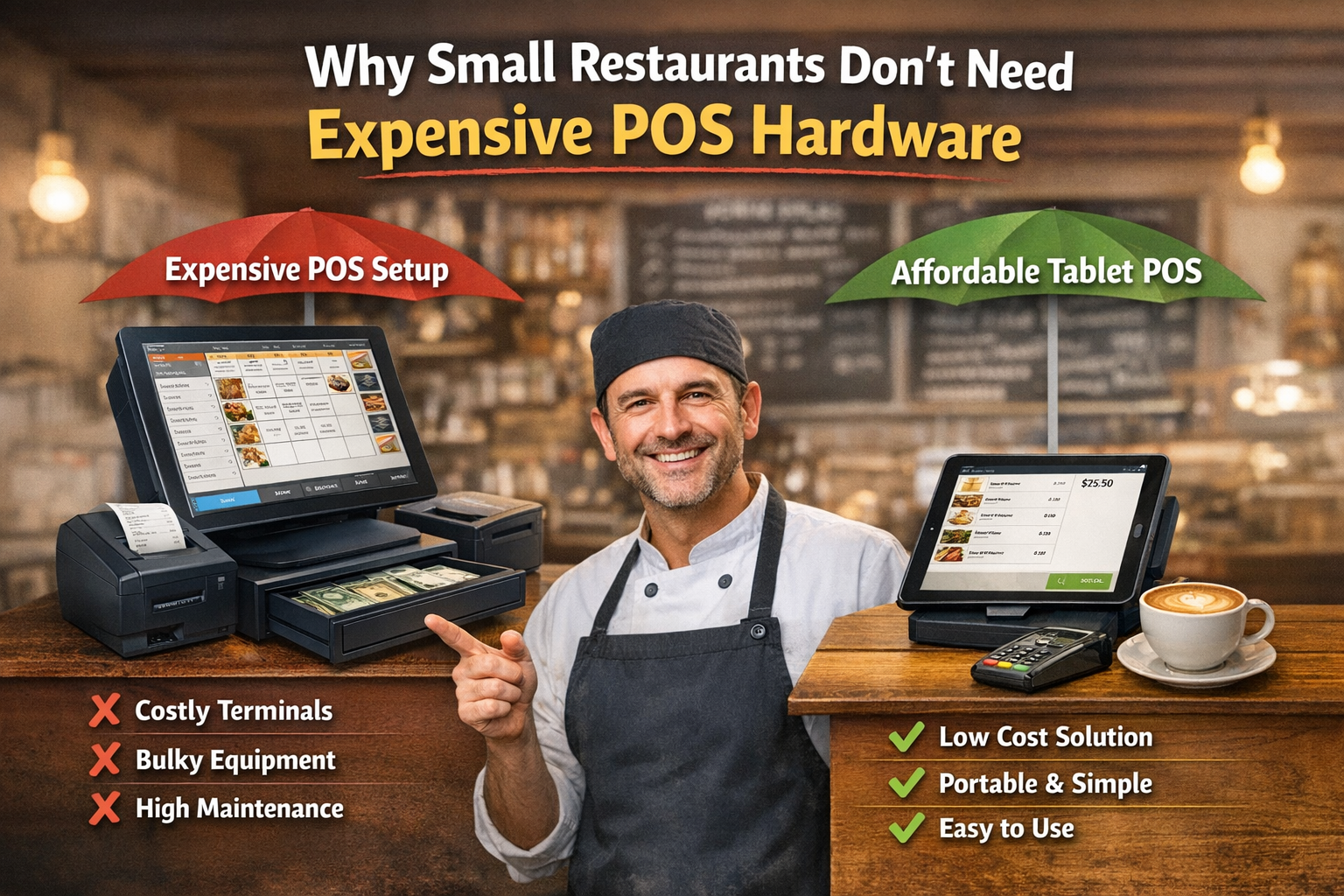
When many restaurant owners think about a POS system, they often picture large touchscreens, bulky terminals, and costly hardware setups. While this might be common in big restaurant chains, it’s often unnecessary — and financially impractical — for small restaurants, cafés, and takeout businesses.
Modern POS technology has evolved, allowing small food businesses to operate efficiently without investing in expensive hardware. Let’s explore why.
The Myth of “Bigger Means Better”
Large POS terminals were once the industry standard because older systems required dedicated machines. Today, POS software is far more flexible.
Small restaurants frequently assume they need:
- Large touchscreen monitors
- Dedicated POS terminals
- Complex wired installations
- High upfront hardware costs
In reality, many of these setups are designed for high-volume operations with complex workflows — not small, fast-moving food businesses.
High Hardware Costs Hurt Small Business Cash Flow
For a small restaurant, every dollar matters. Expensive POS hardware can create unnecessary financial strain.
Costs often include:
- POS terminals & screens
- Receipt printers & cash drawers
- Maintenance & replacements
- Installation expenses
These costs add up quickly, sometimes reaching thousands of dollars before the system even goes live.
For small restaurants with limited margins, this money is often better invested in:
✅ Ingredients & inventory
✅ Marketing & promotions
✅ Staff wages
✅ Customer experience improvements
Tablet-Based POS Systems Are More Than Enough
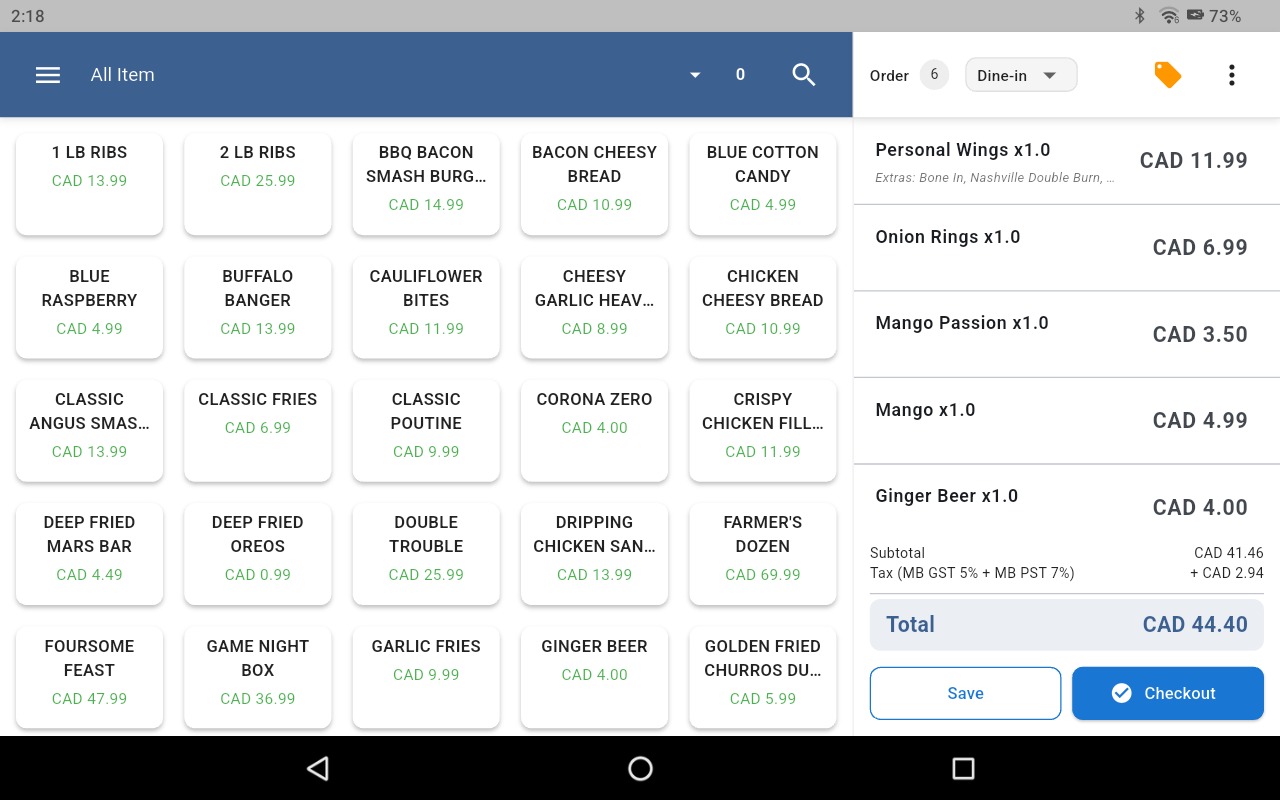
Modern POS software can run smoothly on devices many owners already have — like tablets or compact touchscreen devices.
Benefits of tablet-based POS setups:
- Lower upfront investment
- Minimal space requirements
- Easy to replace or upgrade
- Simple installation
For small counters, food trucks, cafés, and quick-service restaurants, bulky hardware often becomes a burden rather than an advantage.
Mobility Matters in Small Restaurants
Unlike large restaurants with fixed cashier stations, small food businesses are often dynamic.
Staff may need to:
- Take orders at tables
- Handle payments at the counter
- Move between service areas
- Adjust quickly during rush hours
Lightweight POS devices or tablets provide flexibility that traditional terminals cannot. Mobility improves speed, reduces congestion, and enhances service efficiency.
Maintenance & Downtime Risks Are Lower
Complex hardware setups introduce more failure points.
Large terminals can mean:
- Higher repair costs
- Longer downtime during failures
- Dependency on specialized technicians
Simpler setups reduce technical headaches — an important advantage for small businesses that cannot afford operational disruptions.
Software Matters More Than Hardware
For small restaurants, the true value of a POS system lies in its software capabilities, not the size of the screen.
What actually improves restaurant operations:
✔ Fast order processing
✔ Clear billing & checkout
✔ Inventory tracking
✔ Sales reports & analytics
✔ Staff access & controls
A powerful POS software running on affordable hardware can deliver the same operational benefits as expensive systems.
How Inventriks POS Supports Small Restaurants
Small restaurants need solutions designed for practicality, not excess.
Inventriks POS focuses on what small food businesses actually need:
- Smooth billing & order management
- Works with compact devices & tablets
- No costly hardware dependency
- Simple, space-efficient setup
- Budget-friendly approach
This allows restaurant owners to modernize operations without large financial commitments.
Final Thoughts
Expensive POS hardware may look impressive, but for most small restaurants, it’s unnecessary. Modern POS systems prioritize flexibility, mobility, and affordability — all critical for smaller operations.
Instead of investing heavily in hardware, small restaurant owners benefit more from choosing reliable, easy-to-use POS software that fits their workflow and budget.
Smart technology decisions protect cash flow and support sustainable growth.